
What winter does
Indianapolis sees 25.9 inches of snow in an average season, and temperatures move above and below freezing through much of the winter. Three things follow.
- Weight. A gutter full of ice is far heavier than one full of water, and it stays that way for days.
- Sliding snow. A sheet of snow coming off the roof can hit the gutter's front edge and tear it down.
- Ice dams. Meltwater refreezes at the cold roof edge, builds a ridge and backs water up under the shingles.
Damage you find in spring
- A run hanging by one end
- A gutter tipped forward, with spikes pulled out
- Corners opened up
- Downspouts split along the seam
- Fascia stained or soft where water backed up
The repair
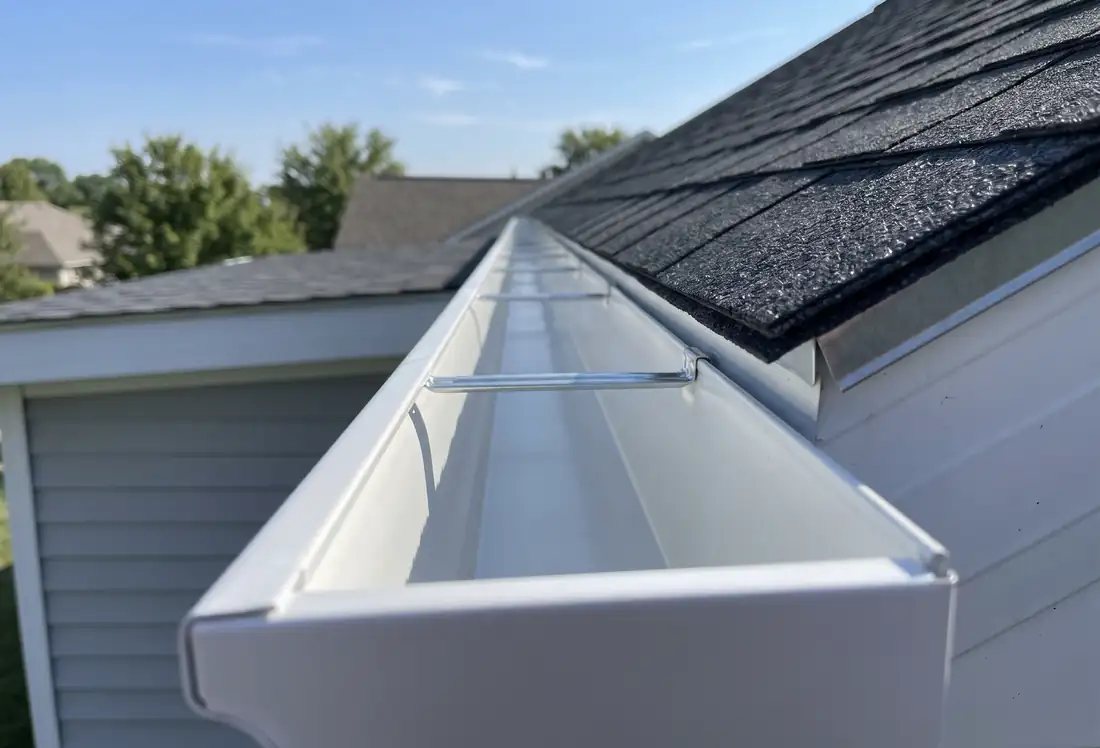
Re-hang on hidden hangers with screws, at two feet or closer, and at 16 inches below valleys. Set the front edge of the gutter slightly below the line of the roof, so that sliding snow passes over it. Replace any creased lengths and split downspouts. Reseal the corners.
What causes ice dams
Heat. Warm air from the house leaks into the attic and warms the underside of the roof. Snow melts, runs down to the overhang, which is cold because nothing heats it, and freezes there.
Gutters do not cause ice dams. A roof with no gutters at all still gets them.
What prevents them
- Seal air leaks in the attic floor: around light fittings, hatches, pipes and wiring.
- Add insulation to the level recommended for this climate.
- Keep soffit and ridge vents open so the roof deck stays cold.
That is work for an insulation or energy contractor.
What a gutter contractor can do
- Fix the gutter strongly enough to carry ice
- Clear gutters and downspouts in late fall so meltwater can drain
- Fit drip edge and check the eave when the roof is replaced
Heating cables along the eave melt channels through ice. They treat the symptom and cost money to run.
See ice dams and gutters.