
How often
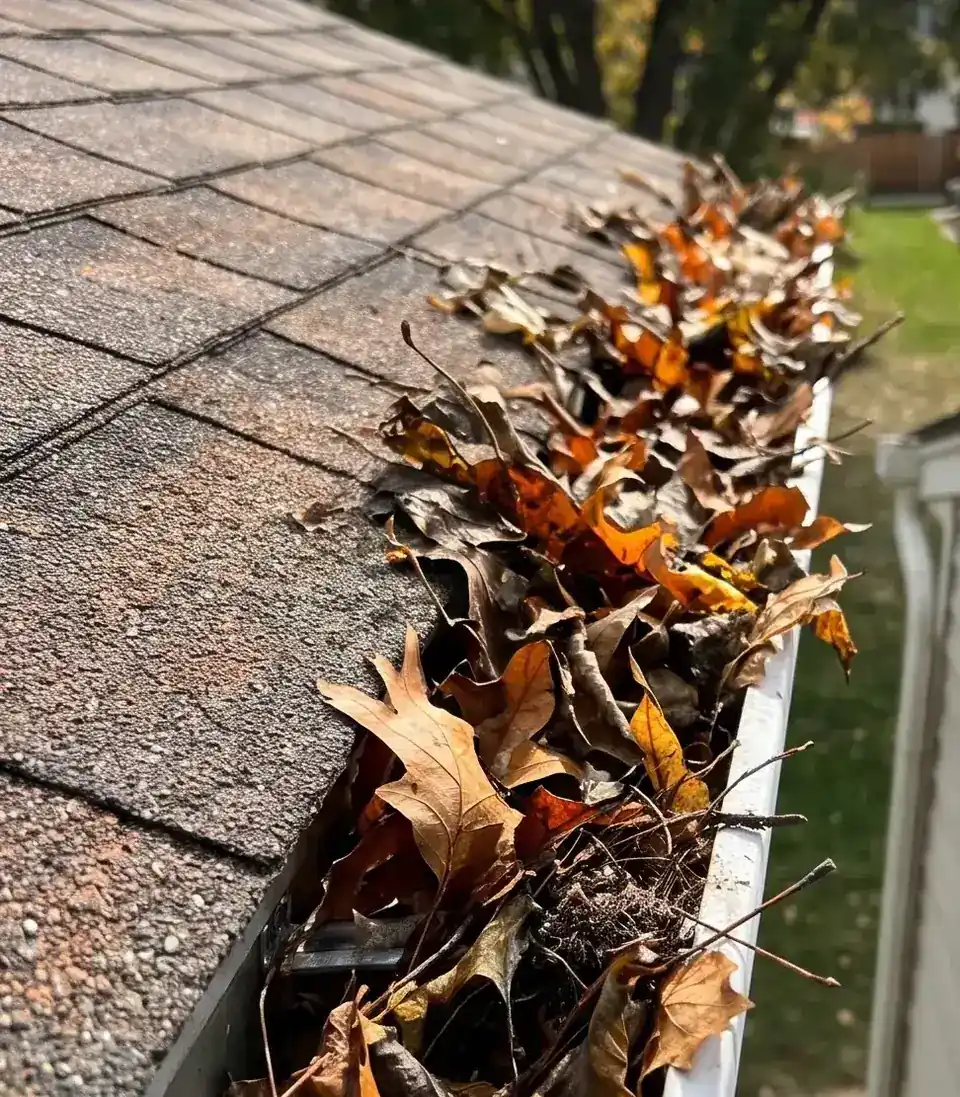
For most Indianapolis houses, twice a year: once in late spring after seeds and tassels have fallen, and once in late fall after the leaves are down.
| Your house | Cleanings a year |
|---|---|
| No trees near the roof | One, to clear grit and check fixings |
| A few trees nearby | Two |
| Large trees over the roof | Three or four |
| Pine or spruce overhead | Three or four |
| Micro-mesh guards fitted | A brush-off once a year and a flush every few years |
With a tree canopy of about 33%, a large share of the city's houses fall in the middle rows.
What a cleaning should include
- Debris lifted out by hand or scoop along every run
- Each downspout flushed until water runs clear at the bottom
- Debris bagged and taken away
- A look at hangers, corners, slope and the fascia, with anything wrong reported to you
The fourth step is the valuable one. A loose hanger found in November is a small job. Found in March, after a winter of ice, it may be a gutter on the lawn.
Why it matters here
Combined sewers. In the older parts of the city, storm drains and sewers share pipes. The utility asks residents to keep gutters and drain inlets clear of leaves and trash to limit backups.
Flat ground and basements. When a gutter overflows, the water lands beside the foundation. On level ground it stays there.
Ice. A gutter full of wet leaves freezes solid. The weight pulls fixings out.
Doing it yourself
A single-storey house on level ground is a reasonable job for a careful owner. Use a ladder with a stand-off so it does not rest on the gutter, keep it on firm ground, and move it often instead of reaching.
Leave it to someone else if the house has two storeys, the ground slopes, the roof is steep, or power lines pass near the roof edge.
If you are cleaning often
More than three cleanings a year is the point at which gutter guards start to pay for themselves. See how often to clean gutters.