
How many
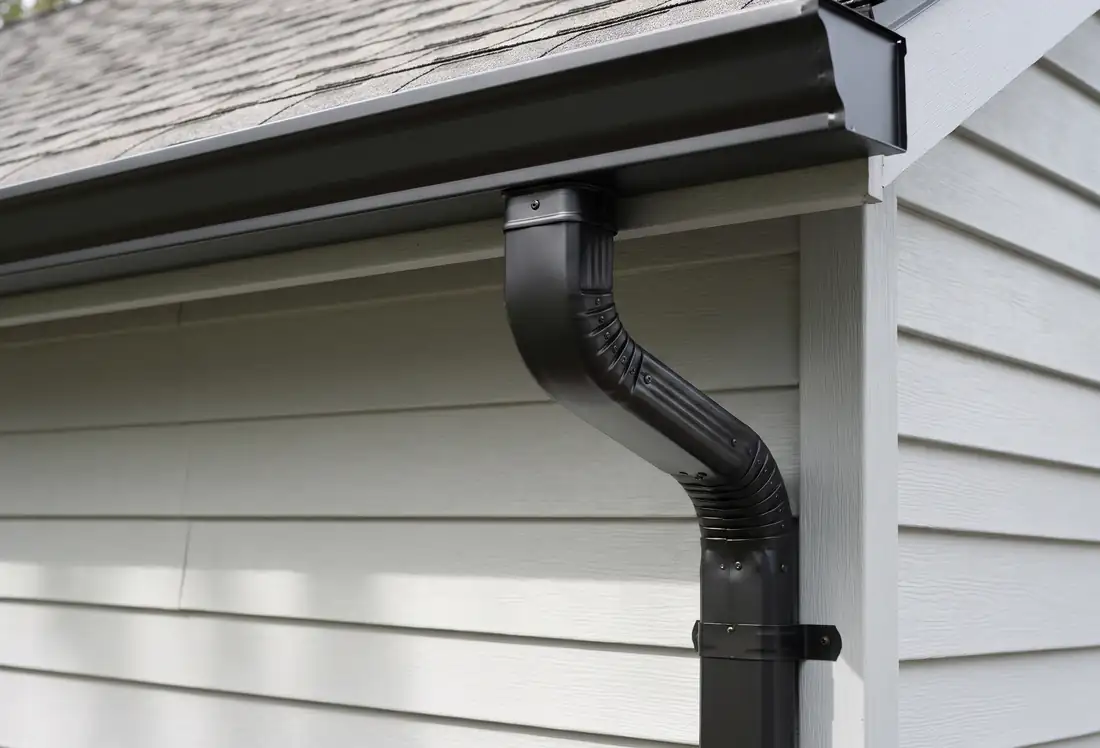
A working rule is one downspout for every 30 to 40 feet of gutter. A 60-foot run should have one at each end with the high point in the middle. Roofs with valleys, or runs that take water from an upper roof, need more.
What size
| Downspout | Pairs with | Opening |
|---|---|---|
| 2x3 inch | 5-inch gutter | About 6 square inches |
| 3x4 inch | 6-inch gutter, or 5-inch on big roofs | About 12 square inches |
| Round 3 or 4 inch | Half-round gutter | Similar |
The larger size also blocks less often, because leaves pass through it.
Where the water should go
Not into the sewer. The local utility asks that downspouts spill onto the ground at least three feet from the building. A downspout that vanishes into a pipe in the ground may be connected to the sewer. See disconnecting downspouts in Indianapolis.
Farther than three feet where you can. Indianapolis is built on flat glacial till, and much of that soil is clay, which drains slowly. Four to six feet is a better target, and ten feet where the lot allows.
Onto your own ground. Water should not be sent onto a neighbor's lot or across a sidewalk, where it freezes in winter.
Ways to carry it away
- Splash block: the minimum. Spreads the flow and stops a hole forming.
- Rigid extension: a length of downspout laid along the ground. Cheap and effective.
- Hinged extension: folds up for mowing.
- Buried pipe to a pop-up outlet: tidy, but needs a steady fall and an outlet you can see.
- Rain barrel: stores some water for the garden. It needs an overflow that leads away from the house.
- Rain garden: a planted hollow that soaks up the flow, set well away from the foundation.
Placement mistakes
- A downspout emptying beside a basement window or stairwell
- One that ends on a driveway and makes ice
- An upper downspout dropping onto a lower roof with a small gutter
- An extension someone removed to mow and never put back